Stroke recovery is often a long journey. Some patients regain movement, speech, or independence steadily through rehabilitation. The earlier stages of rehabilitation can be especially important, as the brain begins to reorganise and form new connections after a stroke.
Imagine a pianist who has played for many years, then suffers a stroke. As rehabilitation begins, they may need to relearn how to control movements that once felt automatic. The hands know what they want to do, but the brain and body connection no longer responds as smoothly as before. During this recovery period, some patients may benefit from additional support to help the brain relearn, reconnect, and respond better to rehabilitation.
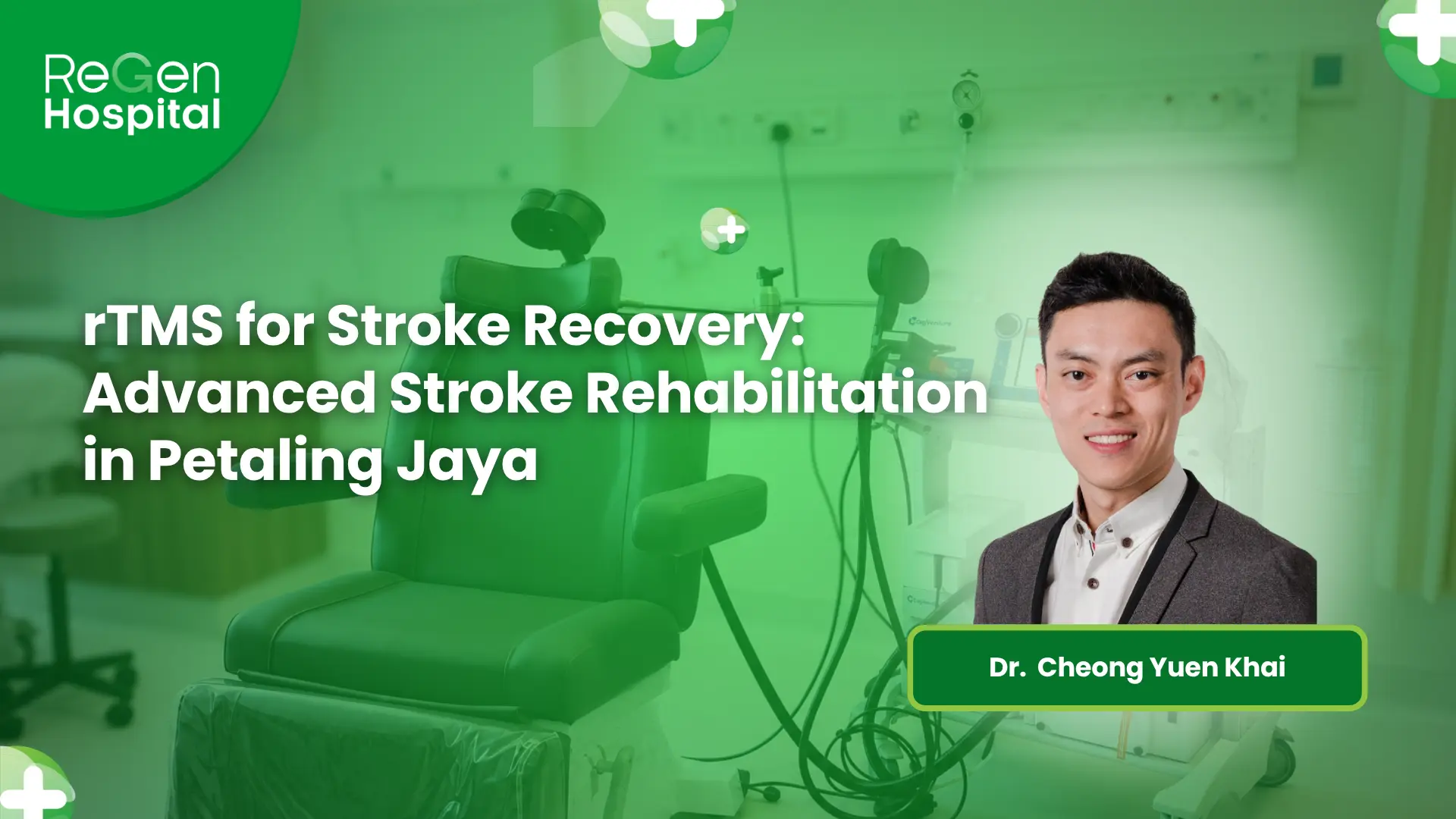
This is where Advanced Brain Stimulation, known as rTMS, may play a role. ReGen Hospital offers Repetitive Transcranial Magnetic Stimulation, also known as rTMS, as part of our advanced neurorehabilitation services for suitable stroke patients in Petaling Jaya.
What is rTMS?
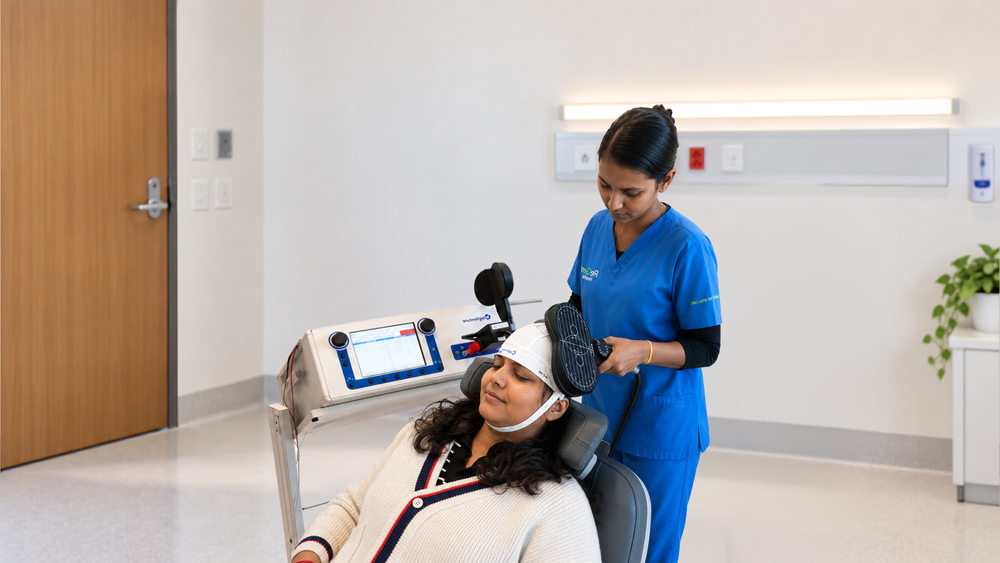
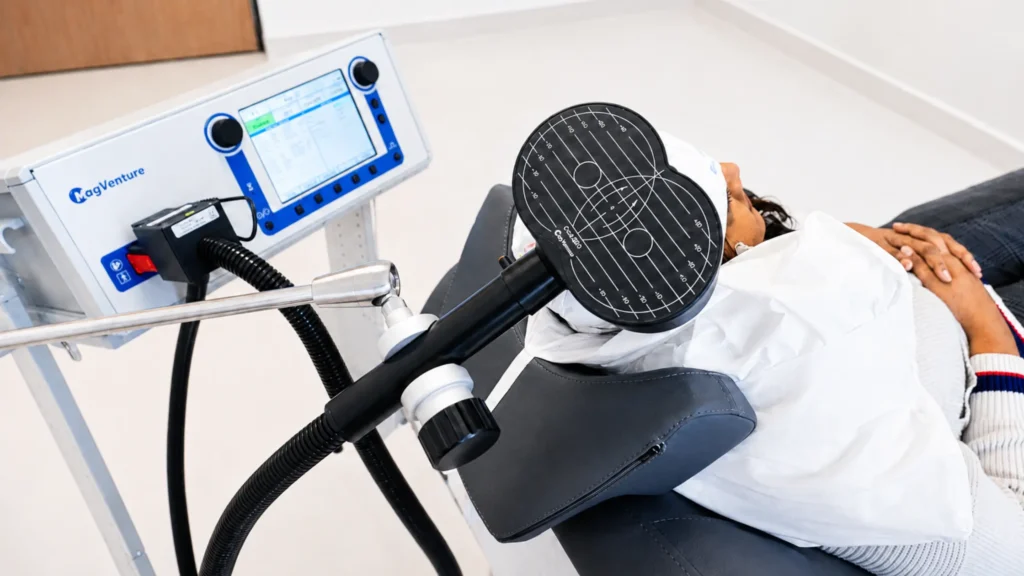
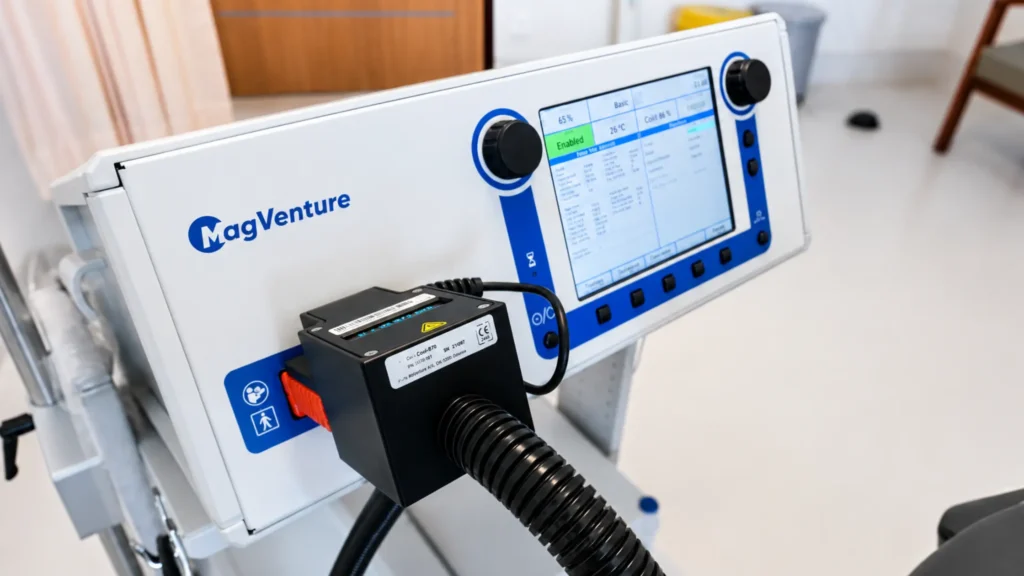
rTMS is a non-invasive brain stimulation therapy that uses magnetic pulses to stimulate targeted areas of the brain.
For selected stroke patients, it may help support brain recovery by encouraging activity in areas involved in movement, coordination, speech, and cognitive function. It does not involve surgery, injections, or anaesthesia, and patients remain awake during each session.
It is also important to understand the role of rTMS in stroke rehabilitation. It is not a cure for stroke, it does not guarantee recovery, and it is not a replacement for physiotherapy, occupational therapy, or speech therapy. When appropriate, rTMS can be included as part of a personalised stroke rehabilitation plan alongside our multidisciplinary therapy programmes.
Who is rTMS for?
rTMS may be considered for suitable stroke patients who are experiencing:
- Early-stage rehabilitation needs following a stroke
- Weakness or reduced limb movement after stroke
- Slower than expected rehabilitation progress
- A recovery plateau despite ongoing rehabilitation
- Speech or communication challenges
- Memory or cognitive concerns after stroke
- Difficulty regaining daily independence
Family members and caregivers are often the ones researching options. If you are an adult child or spouse looking for advanced rehabilitation support for a loved one, an rTMS suitability enquiry can be a helpful starting point.
At ReGen Hospital, rTMS is only recommended after a doctor’s assessment and diagnosis. It is not suitable for every stroke patient, and the decision to proceed will depend on the patient’s condition, medical history, stroke stage, rehabilitation goals, and doctor’s recommendation. Patients with a history of seizures or certain metal or electronic implants must be reviewed carefully during screening.
When should rTMS be considered?
rTMS may be considered when a patient is medically stable and has been assessed as suitable by a doctor. In some cases, rTMS may be introduced as early as 4 weeks after a stroke, depending on the patient’s condition, recovery stage and rehabilitation goals.
It may be especially relevant during the earlier stages of stroke rehabilitation, when the brain is beginning to reorganise and form new connections. However, rTMS is not limited to early recovery and may also be considered later if additional support is needed for movement, speech or cognitive rehabilitation.
rTMS does not need to be reserved only for patients whose rehabilitation progress has slowed or reached a plateau. It may also be considered earlier in the recovery journey, or later when additional support is needed for movement, speech or cognitive rehabilitation.
Depending on the patient’s condition and doctor recommendation, rTMS can be arranged as part of outpatient or inpatient rehabilitation.
Where is it available?
The service is offered at ReGen Hospital, Petaling Jaya. For families across the Klang Valley searching for advanced stroke rehabilitation close to home, this means access to brain stimulation therapy alongside a full rehabilitation team in one location.
Why consider rTMS for stroke recovery?
After a stroke, some brain networks may become underactive or poorly coordinated. For suitable stroke patients, rTMS may help to:
- Support motor recovery and limb movement
- Improve brain stimulation for patients facing a recovery plateau
- Complement physiotherapy, occupational therapy, and speech therapy
- Support neuroplasticity, which is the brain’s ability to reorganise and form new pathways
- Assist selected patients with movement, speech, or cognitive rehabilitation goals
In simple terms, rTMS may help prepare the brain to respond better to structured therapy. For families, the reason is straightforward: they want their loved one to move better, communicate better, recover more function, and regain as much independence as possible.
Why choose rTMS at ReGen Hospital?
- Non-invasive brain stimulation therapy
- Suitable for selected stroke patients after doctor assessment
- Supports personalised neurorehabilitation planning
- Complements existing stroke rehabilitation programmes, including physiotherapy, occupational therapy, speech therapy, and robotic rehabilitation
How does the treatment journey work?
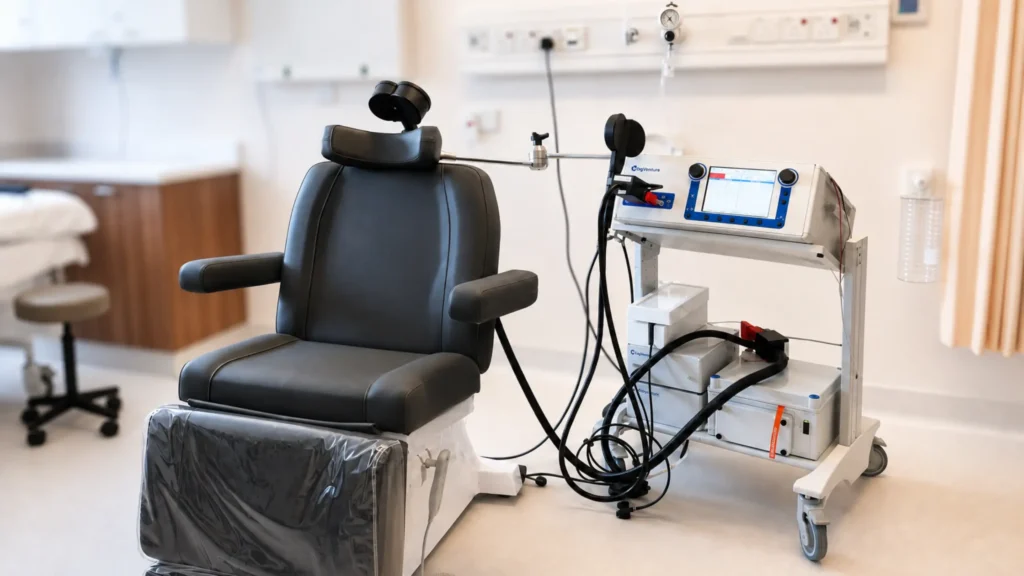
The journey at ReGen Hospital is doctor-led from the first step:
Step 1: Enquiry and safety screening. The patient or caregiver contacts the hospital, and the team conducts an initial screening covering stroke history, current challenges, rehabilitation goals, and safety considerations.
Step 2: Doctor assessment and diagnosis. A doctor reviews the patient’s medical condition, stroke stage, and rehabilitation goals to confirm whether rTMS may be suitable. Not every patient is an appropriate candidate, and this step protects patient safety.
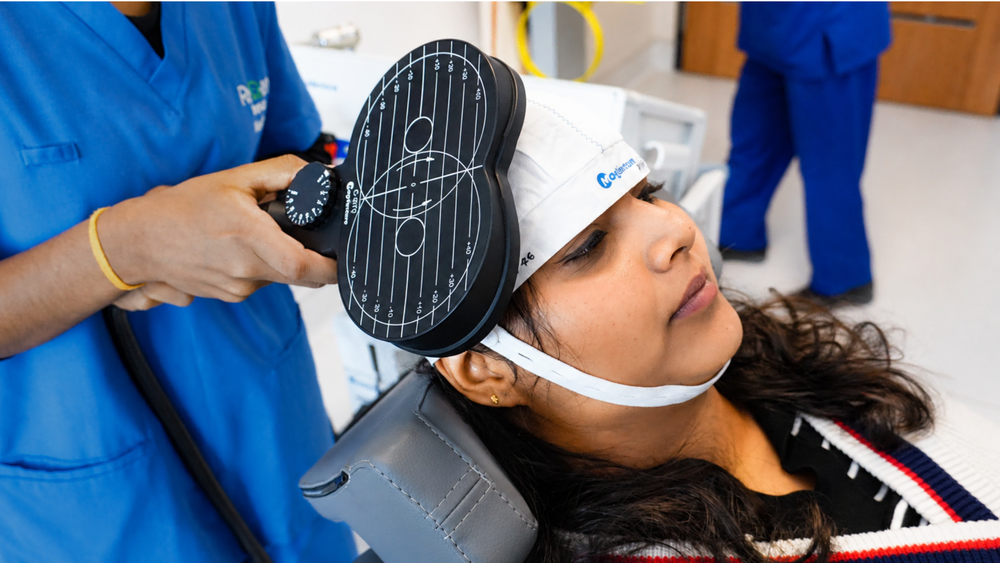
Step 3: Mapping and personalised planning. If suitable, the clinical team carefully identifies and marks the treatment area to support accurate and consistent stimulation in every session.
Step 4: rTMS sessions with combined rehabilitation. The doctor selects the appropriate treatment approach based on the patient’s condition. Sessions are paired with active rehabilitation, which may include physiotherapy, occupational therapy, or speech therapy.
Step 5: Progress review. The patient’s progress is reviewed, and the doctor advises whether further sessions or continued rehabilitation is recommended.
Take the next step
If you or a loved one has started stroke rehabilitation and is looking for additional support during the recovery journey, an rTMS suitability assessment may be worth exploring.
Early assessment can help the rehabilitation team determine whether rTMS may be appropriate and when it may be introduced as part of a personalised rehabilitation plan.
Contact ReGen Hospital, Petaling Jaya to enquire.
Doctor assessment and diagnosis are required before treatment. rTMS is suitable for selected patients only. Results vary depending on stroke severity, recovery stage, medical condition, and rehabilitation participation.
Frequently Asked Questions (FAQs):
1. Will I see results after the first session?
Not usually. rTMS works through repeated sessions and is combined with rehabilitation. Any improvement depends on the patient’s condition, stroke severity, therapy participation, and overall recovery potential.
2. Is rTMS painful?
Most patients tolerate it well. Some may feel tapping sensations, mild scalp discomfort, or a temporary headache. The clinical team monitors every session.
3. Is rTMS a replacement for physiotherapy?
No. rTMS is an add-on therapy that supports, not replaces, structured rehabilitation.
4. Where can I find a specialised stroke rehabilitation centre in Malaysia?
ReGen Hospital in Petaling Jaya, Selangor provides personalised stroke rehabilitation programmes, including physiotherapy, occupational therapy, speech therapy, robotic rehabilitation and rTMS for selected patients.
5. Is there a neurological rehabilitation centre in the Klang Valley?
Yes. ReGen Hospital provides specialised neurological and stroke rehabilitation in Petaling Jaya, serving patients from across the Klang Valley, including Selangor and Kuala Lumpur (KL).