
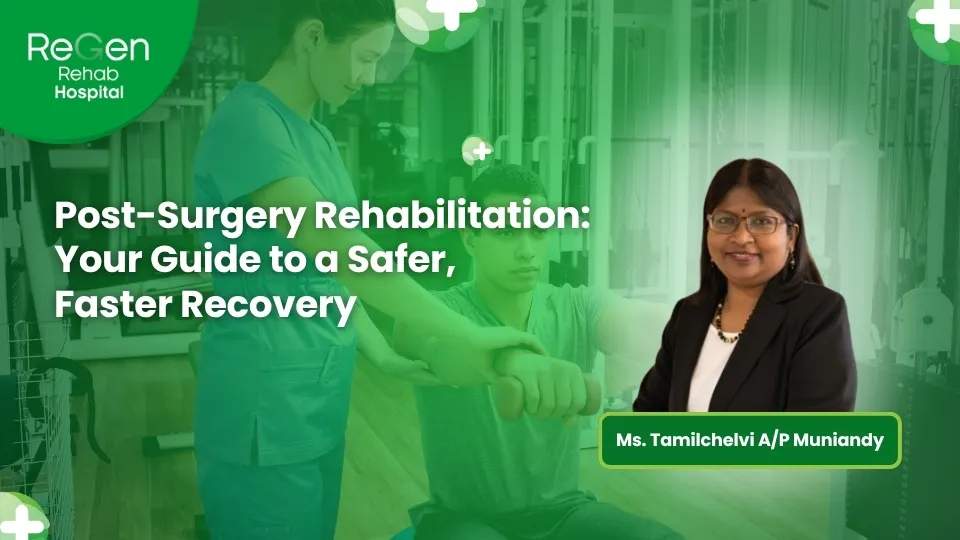
Post surgery rehabilitation is the essential part of healing that occurs after you leave the operating room. While surgery is often the necessary “fix” for a structural issue, rehabilitation is what restores your actual function.
Whether it is walking comfortably, regaining the use of an arm, or returning to work, a structured plan ensures you regain your independence without the fear of re-injury.
In this guide, we explore what it involves and the timeline for recovery.
What is Post Surgery Rehabilitation (and Why It Matters)
Think of surgery as a “hardware update” and rehabilitation as the “software optimisation.” Even the most successful surgery requires the body to relearn how to move efficiently.
A personalized post-surgical care plan helps prevent common problems after surgery, such as stiffness, muscle weakness, and unnecessary dependence on caregivers.
Depending on your surgery and condition, your plan may include:
- Pain and swelling management
- Safe mobility training (walking, using stairs, and moving safely)
- Strength and endurance rebuilding
- Improving joint movement and flexibility
- Balance training and fall-prevention
- Wound-care guidance and home safety advice
- Preparation to return to work, sport, or daily responsibilities
A proper rehabilitation plan also helps reduce stiffness, weakness, poor walking patterns, fear of movement, and over-reliance on others.
The Core Goals of Post-operative Recovery
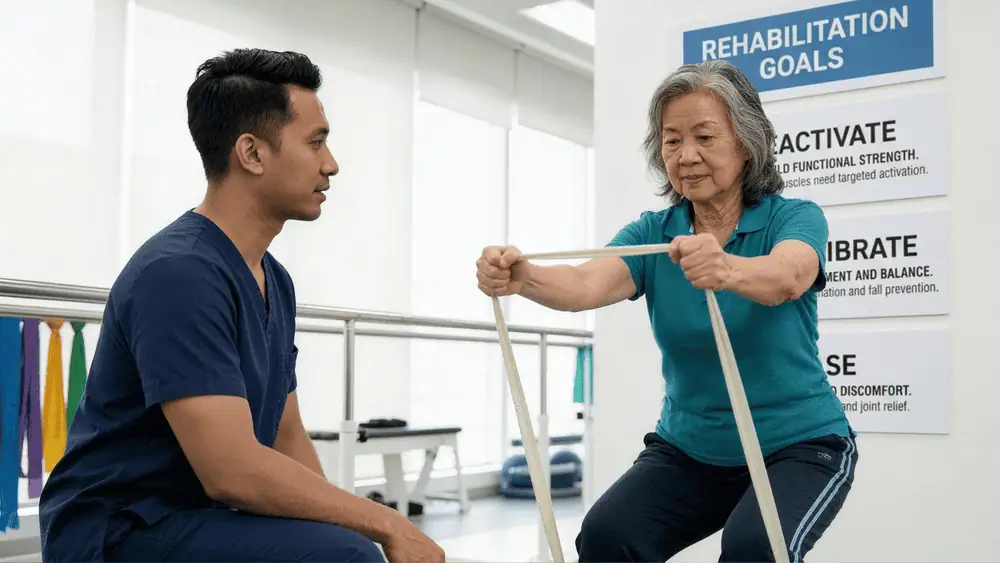
The main goal of rehabilitation is to help you safely return to your normal daily life after surgery. Recovery is not just about “doing exercises”. It focuses on three key goals:
- Reactivate (Rebuild Functional Strength): After surgery, muscles can become weak due to inactivity. Rehabilitation helps reactivate and strengthen these muscles so they can properly support your joints and restore your physical function.
- Recalibrate (Restore Movement and Balance):Surgery and scar tissue can limit movement and affect balance. Rehabilitation improves joint mobility, coordination, and balance, helping you move with greater confidence and reducing the risk of falls.
- Release (Reduce Pain and Discomfort): Movement and therapy techniques help improve blood circulation, reduce stiffness, and relieve discomfort. This supports recovery and reduces the need for long-term pain medication.
When Should You Start Post Surgery Rehabilitation?
The short answer is: you can begin as soon as your surgeon gives the green light, often within 24 to 48 hours after your procedure.
Early movement is very important for recovery. Although it may feel uncomfortable to move after surgery, gentle and guided movement helps prevent blood clots, reduce stiffness, and improve blood circulation to support faster healing.
Delaying physical therapy can lead to scar tissue buildup, increased stiffness, and a slower, more difficult recovery.
The 3 Phases of a Post Surgery Recovery Program
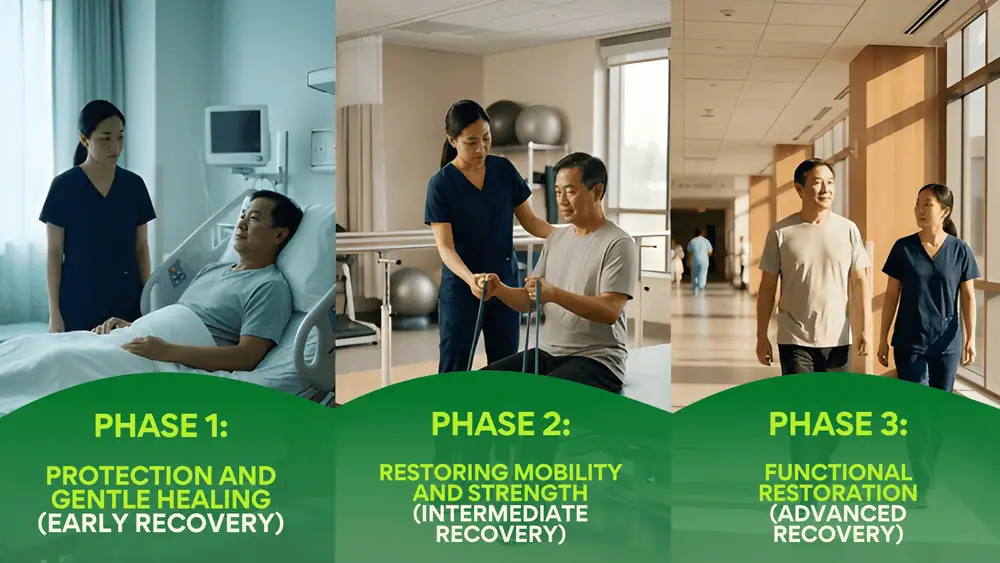
Recovery after surgery takes time, and your post surgery recovery program will progress as your body heals. Every patient’s recovery is different, depending on the type of surgery and overall condition. However, most recovery programs follow three main phases:
Phase 1: Protection and Gentle Healing (Early Recovery)
In the early stage after surgery, the focus is on protecting the surgical area, reducing pain and swelling, and starting safe, gentle movement. Your therapists will guide you through gentle exercises to prevent stiffness without placing stress on the healing tissues.
Phase 2: Restoring Mobility and Strength (Intermediate Recovery)
As your body heals, rehabilitation becomes more active. This phase includes guided movements, light strengthening exercises, and balance training.The goal here is to rebuild muscle strength, improve joint movement, and help your body regain stability and control.
Phase 3: Functional Restoration (Advanced Recovery)
This phase focuses on helping you return to your normal lifestyle. Therapy will include exercises to improve strength, endurance, balance, and coordination. Your program will be tailored to your daily needs, whether it is walking independently, returning to work, or resuming sports and regular activities.
Post-surgery rehabilitation helps you safely transition from surgery to full recovery. With the right timing and professional guidance, you can recover faster, regain your independence, and return to the activities you enjoy with confidence.
Choosing the Best Post Surgery Rehabilitation Center
Your recovery environment plays an important role in how well and how quickly you heal. You need more than just a room. You need a specialised facility with the right equipment and a team of experienced professionals to support your recovery.
As Malaysia’s largest MOH-certified facility, ReGen Hospital is dedicated to providing that exact environment. We go beyond basic symptom management by combining holistic medical care with a patient-centric, 1-to-1 model. This ensures every recovery plan is highly personalized and supported by world-class facilities, including advanced robotic systems.
Our team works closely with each patient to create a personalised recovery plan. We also guide patients and caregivers with the knowledge and skills needed for safe recovery and long-term independence. Our goal is not just to help you recover from surgery, but to help you return to your best possible quality of life.
Whether you are recovering from major surgery, a neurological condition, or joint replacement, we provide specialised rehabilitation services, including:
- Orthopaedic Rehabilitation
- Amputee Rehabilitation
- Sports Rehabilitation
- Bone Health Clinic
- Cardiac Rehabilitation
- Geriatric Rehabilitation
- Cancer Rehabilitation
Start Your Recovery with the Right Support. If you or your loved one is preparing for discharge, or still facing mobility challenges after surgery, ReGen Hospital is here to help. We provide tailored support across neurological, orthopaedic, and geriatric care to match your specific goals. Contact us today to learn more about our post-surgery rehabilitation services.
Frequently Asked Questions (FAQs):
1. When should I start rehabilitation after surgery?
In most cases, rehabilitation can begin once your surgeon confirms it is safe, often within 24 to 48 hours after surgery. Early rehabilitation helps reduce stiffness, prevent muscle weakness, improve circulation, and support faster recovery.
2. Is rehabilitation really necessary after surgery?
Yes. Rehabilitation is an important part of recovery. Without proper rehabilitation, you may experience stiffness, muscle weakness, poor mobility, and slower recovery. A structured rehabilitation program helps you regain strength, movement, and independence safely.
3. How long will post-surgery rehabilitation take?
The recovery period varies depending on your surgery, condition, age, and overall health. Some patients recover in a few weeks, while others may need several months. Your rehabilitation team will create a personalised plan based on your progress and recovery goals.
4. What happens during post-surgery rehabilitation?
Your rehabilitation program may include pain management, guided exercises, mobility training, strength building, balance training, and education on safe movement. The goal is to help you recover safely and return to your daily activities with confidence.
5. How do I know if I need inpatient rehabilitation or outpatient rehabilitation?
If you have difficulty walking, need close medical supervision, or require intensive therapy, inpatient rehabilitation may be recommended. If you are medically stable and can travel, outpatient rehabilitation may be suitable. Our team will assess your condition and recommend the best option.
6. Where can I find specialised post-surgery rehabilitation in Selangor or Kuala Lumpur?
ReGen Hospital, located in Petaling Jaya, is Malaysia’s largest private rehabilitation hospital licensed by the Ministry of Health. We provide personalised rehabilitation programs supported by advanced technology and a multidisciplinary team to help patients recover safely and effectively.
7. What happens if I delay rehabilitation?
Delaying rehabilitation can lead to muscle weakness, joint stiffness, poor mobility, and longer recovery time. Starting rehabilitation early helps improve recovery outcomes and reduces the risk of long-term complications.