
Free Indigestion Health Talk
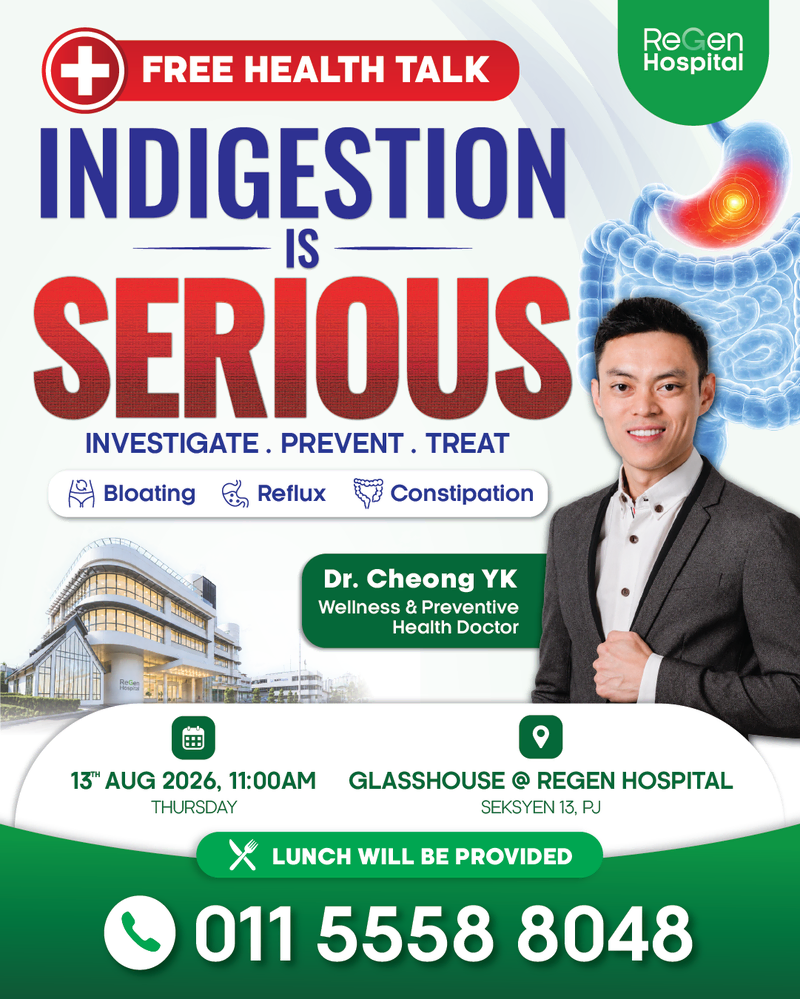
Indigestion Could Be Serious
Investigate. Prevent. Treat.
Indigestion, or dyspepsia, may cause upper abdominal pain, burning, bloating, nausea, belching, early fullness or discomfort after eating.
Most cases are not serious, but recurring symptoms may be linked to gastritis, stomach ulcers, H. pylori infection or, less commonly, stomach cancer (NIDDK, 2025).
In Malaysia, colorectal cancer was the second most commonly diagnosed cancer in 2024, with an estimated 7,693 new cases. Stomach cancer accounted for about 2,170 cases (IARC, 2026).
Do Not Ignore Recurring Symptoms
Indigestion does not automatically mean cancer. However, symptoms that persist, worsen or occur with weight loss, difficulty swallowing, vomiting or bleeding should be assessed.
Early stomach cancer may also cause indigestion, bloating, nausea, heartburn or appetite loss, although these symptoms are often caused by non-cancerous conditions.
What You’ll Learn
1. What Indigestion Feels Like
Common symptoms include:
- Upper abdominal pain or burning
- Bloating or nausea
- Feeling full too quickly
- Discomfort after eating
- Frequent belching
2. Common Causes
Recurring indigestion may be caused by:
- Functional dyspepsia
- Gastritis
- Stomach ulcers
- H. pylori infection
- Certain medications
- Acid reflux
3. Warning Signs
Seek medical advice if you experience:
- Difficulty swallowing
- Persistent vomiting
- Vomiting blood
- Black stools
- Severe abdominal pain
- Unexplained weight loss
- Loss of appetite
- Symptoms that do not improve
4. Indigestion vs Colorectal Symptoms
Indigestion usually affects the upper digestive system.
Possible colorectal cancer symptoms include:
- Blood in the stool
- Persistent constipation or diarrhoea
- Changes in bowel habits
- Ongoing abdominal pain or bloating
- Unexplained weight loss
- Tiredness or anaemia
5. Cancer Risk Factors
Stomach Cancer
Risk factors include long-term H. pylori infection, smoking, obesity, family history and diets high in salted or smoked foods.
Colorectal Cancer
Risk factors include older age, family history, bowel polyps, obesity, physical inactivity, smoking, alcohol and diets high in processed or red meat (WHO, 2026).
6. Why Early Assessment Matters
A doctor may assess your symptoms, medical history and warning signs before recommending tests.
A gastroscopy examines the oesophagus and stomach. A colonoscopy examines the colon and can detect or remove abnormal growths
Who Should Attend?
This health talk is suitable for:
- Adults with recurring indigestion or bloating
- People with heartburn, nausea or early fullness
- Individuals with changes in bowel habits
- Those with a family history of digestive cancers
- Anyone concerned about H. pylori, ulcers or gastritis
- Adults who want to understand gastroscopy and colonoscopy
Our Speaker

Dr. Cheong Yuen Khai
Wellness & Preventative Health Doctor
Who Should Attend?
This health talk is suitable for:
- Adults who are concerned about memory changes
- Families with elderly parents or loved ones
- Caregivers supporting someone with memory or behaviour changes
- Anyone who wants to understand dementia prevention, early signs, and care options
- Seniors who want to learn how to support better brain health
Our Speaker
Dr. Cheong Yuen Khai
Wellness & Preventative Health Doctor
Reserve Your Seat for the Indigestion Health Talk
Kindly complete this form to secure your slot for the health talk. Your confirmation will help us with the necessary event arrangements.
Registration Closed
Please be informed that registration is now closed, and we are no longer accepting new submissions. Thank you for your interest and understanding.
Health Talk Details
Details
Date: 13/08/2026 (Thursday)
Time: 11.00AM
Location
Glasshouse @ ReGen Hospital Sdn Bhd, Lot 8, Jalan Bersatu 13/4, PJS13, 46200 Petaling Jaya, Selangor.